


ServSafe | Practice Test 2026
4.837.00 Reviews
App Specs
- Version
- 5.0.0
- Updated On
- License
- Free
- Downloads
- 10,000+
- Developer
- EZ Prep
- Categories
- Education
- Platform
- Android
Screenshots
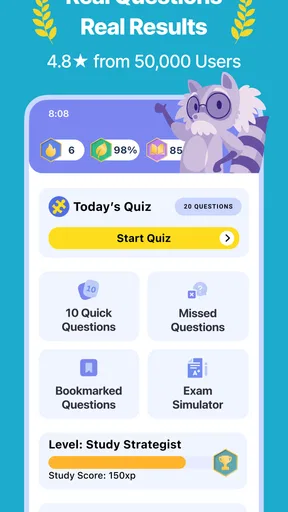
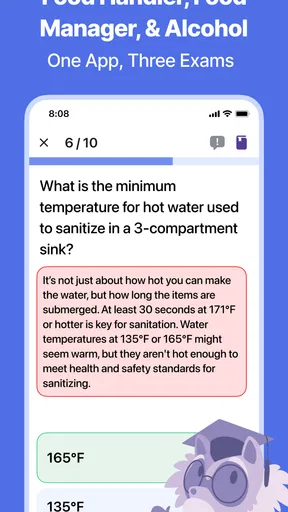
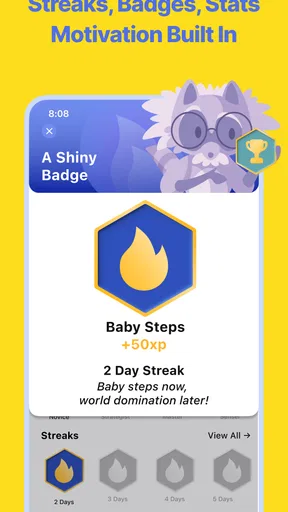
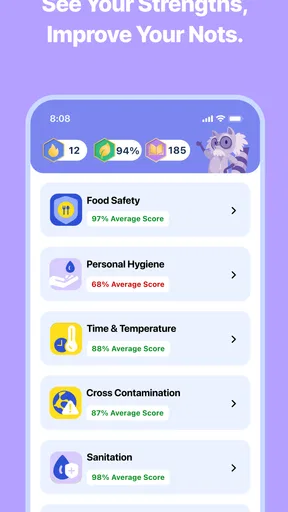
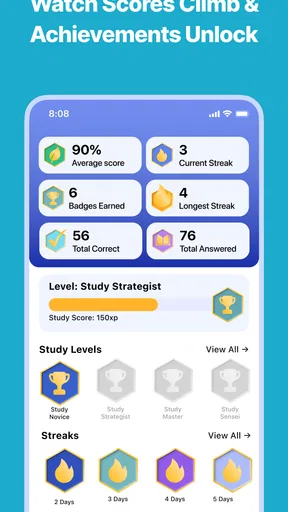
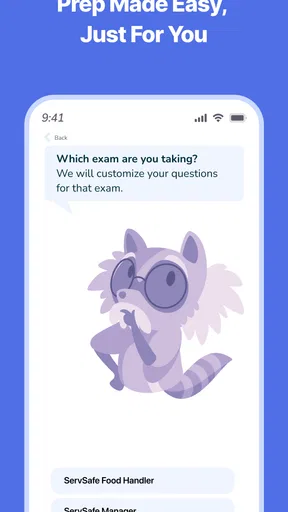
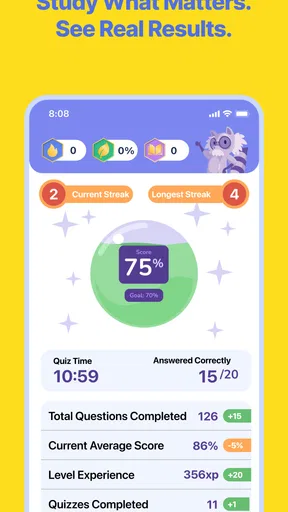

 Analysis by AppCompare
Preparing for a food-safety, food-handler, manager, or alcohol certification exam is not difficult because the material is always complicated. It is difficult because the study process has to fit around shifts, changing schedules, and the pressure of remembering rules that sound similar. I tested ServSafe | Practice Test 2026 as an education app from EZ Prep, and my overall impression is that it works best as a focused practice companion rather than as a complete replacement for an official course or certification provider.
The app is free to install and is rated for Everyone, which makes it easy to try without committing money at the start. Its listing shows a 4.8 average from around 500 ratings and more than 10,000 installs, so it has already attracted a useful audience without being so large that it feels impossible to judge. The current release is version 5.0.0, and it runs on Android 8.0 or later. Optional purchases range from $9.99 to $64.99 per item, so I would check what is included before paying for anything.
Where the study experience can become frustrating
The first thing I noticed is that a practice-test app demands a different kind of attention from a normal learning app. You are not simply reading a lesson and moving on. You have to interpret a question, choose an answer, understand why it is right or wrong, and then remember the rule well enough to recognize it in a different situation. That makes short sessions useful, but it also exposes weak spots quickly.
For example, I would not use this app by tapping through questions as fast as possible during a break. That creates the feeling of progress without necessarily improving recall. A better routine is to stop after every uncertain answer and write down the subject in plain language: temperature control, personal hygiene, cross-contamination, cleaning, storage, or alcohol-service responsibility. The specific question may disappear from memory, but the subject label gives you something practical to review later.
Another point of friction is the difference between knowing a rule and recognizing the wording of a test question. Certification questions often present a familiar situation with one detail changed. If I only memorize the correct option, I am vulnerable when the wording changes. I found the app more useful when I treated each question as a small scenario and asked myself what risk the rule is designed to prevent.
This is also where expectations matter. The app’s short description is simply “ServSafe,” while its broader summary refers to manager, food-handler, and alcohol certification preparation. I would therefore use it as a preparation tool for those areas, but I would still confirm the exact exam or course requirements with the employer, training provider, or certification body involved. Practice questions can improve readiness; they do not automatically prove that a particular certificate or jurisdictional requirement has been satisfied.
Why setup checks matter before studying
Before starting seriously, I would make sure the phone is running Android 8.0 or newer and that the application has been updated to version 5.0.0 if that is the release offered on the device. This sounds basic, but an older operating system or an incomplete update can create problems that look like app errors. I would also restart the phone after an update if screens behave strangely, especially before assuming that study progress or question content is broken.
Worth Reading Before You Choose

Flipboard Shows What News Apps Must Do Beyond the Feed

Switching to Android Auto Means Rethinking Your Driving Routine

Google Calendar Makes a Crowded Week Easier to Manage

Ludo King Makes the Most of the Minutes Between Plans

Baby Panda World Brings Quick Play to Modern Phones, but Its Game Library Feels Busy

ESPN’s Live Game View Makes Following Close Games Easier
I would begin with a short test session rather than buying an optional package immediately. The free entry point lets me judge whether the question style suits my learning habits, whether the navigation feels comfortable, and whether the available material matches my goal. Since individual in-app purchases can cost from $9.99 to $64.99, that small trial is a sensible way to avoid paying for content that does not fit the exam I am preparing for.
My next check would be practical: am I studying for a manager assessment, a food-handler requirement, or alcohol certification? These are related workplace subjects, but they are not interchangeable. A manager may need broader responsibility-based knowledge, while a new food handler may need a more focused understanding of safe handling habits. Choosing a study path based on the actual job requirement is more effective than assuming that every section has equal value.
I would also prepare a simple note system before opening the first question. One page divided into “I knew it,” “I guessed,” and “I missed it” is enough. The guessed answers deserve attention even when they happen to be correct. This is one of the most useful ways to avoid a false sense of confidence, because a lucky answer is not the same as reliable knowledge.
A workflow that turns mistakes into useful revision
My preferred workflow with this app is short and repetitive. I start with a small batch of questions, review every uncertain response, and then stop while I can still explain what I learned. In the next session, I revisit the weak subjects before moving into new material. That approach is less exciting than completing a long run, but it gives the mistakes a chance to become memory rather than just a score.
One practical trick is to classify an incorrect answer by the reason it went wrong. Sometimes I misunderstood the question. Sometimes I confused two similar safety concepts. Sometimes I knew the rule but overlooked a key word. These are different problems and need different fixes. Reading more content will not necessarily solve a careless-reading habit, while slowing down and underlining the decisive detail mentally may help.
I would also use the app alongside real workplace examples. If I am working in a kitchen, I can connect a question about safe handling to the actual flow of receiving, storing, preparing, and serving food. If I am preparing for alcohol certification, I can think about how responsible service decisions are made in a real shift. This does not replace formal instruction, but it makes abstract answers easier to retrieve under exam pressure.
A realistic everyday scenario would be a restaurant employee studying on a bus ride before an evening shift. Instead of attempting a full session while distracted, I would answer a few questions, mark the uncertain topics, and review those notes after work. On a day off, I would use a longer uninterrupted session to check whether the same topics still cause trouble. The app is most valuable in that rhythm: quick recall during spare moments, followed by deliberate review when there is time.
Recovering when a session does not go as planned
If a question session freezes, closes, or fails to behave normally, I would begin with safe, ordinary checks rather than repeatedly tapping the same control. I would confirm that the phone has a stable internet connection if the current screen appears to require one, close other applications, reopen the study app, and restart the device. I would also check whether an update is waiting. These steps address common phone-level problems without assuming that the learning content itself is at fault.
If progress appears different after reopening, I would avoid immediately clearing application storage. Clearing data can remove local information, and it is not a good first response when the real issue may be a temporary display or connection problem. I would first note where I stopped, take a moment to reproduce the issue carefully, and then use the app’s normal support route if the problem continues. The safest troubleshooting habit is to change one thing at a time so I know which step helped.
There is also a study-recovery problem that has nothing to do with software. A poor score after a long, tired shift does not necessarily mean the app is unsuitable or that I have learned nothing. Fatigue affects reading accuracy, especially when questions use similar wording. If I repeatedly miss questions late at night but perform better earlier, I would change the study time before changing the app. A short, alert session is usually more informative than a long session completed while exhausted.
When I lose track of what I have already reviewed, I would rebuild the routine manually. I would list the subjects covered, identify the two weakest, and return to those before starting another mixed practice run. This is more reliable than chasing a perfect streak or repeating only the questions that feel comfortable. The goal is not to make the app show a good result; it is to make the underlying decisions easier to explain.
When the app is not the cause of the problem
Some frustrations come from the exam plan itself. A user may expect one practice app to reveal the exact questions that will appear in a particular assessment. That is not a sensible standard for any legitimate preparation tool. The better question is whether the app helps me understand the kind of reasoning required and exposes gaps that I can correct with proper study material.
I would not rely on this app alone if I am completely new to food safety or responsible alcohol service. Practice questions are strongest after I have learned the concepts from an approved course, workplace training, handbook, or instructor. Without that foundation, I may memorize patterns without understanding why an answer is safe. In that situation, a structured class or official learning resource is the better first purchase, with this app used afterward for reinforcement.
I would also be cautious if my employer requires a specific certification process. The app can help me prepare, but the accepted certificate, exam provider, and local requirements are separate matters. A high practice score does not by itself establish that an employer or authority will accept the result. This is an important distinction for anyone studying under a deadline.
There is a similar trade-off for experienced workers. Someone who already handles food safely every day may find basic questions repetitive, while a formal textbook or instructor-led review may explain unusual cases in more depth. On the other hand, repetition can be exactly what a learner needs before an exam. I would keep the app if it highlights uncertain areas efficiently; I would switch to a deeper resource if I need extended explanations rather than question practice.
Compared with searching random quiz pages in a browser, a dedicated app is more convenient for maintaining a regular routine and keeping the study task in one place. Compared with a full course, it is likely to feel lighter and faster, but also less complete as a teaching experience. That middle position is its real value. It is not the best answer for every learner, yet it can be a practical bridge between reading the material and facing a timed assessment.
Who should use it and who should skip it
I would recommend trying it to a food-service employee who already knows the basic workplace vocabulary and wants repeated practice on a phone. It also suits a manager candidate who needs to identify weak areas during a busy week, provided the app is used alongside the required training. The free starting point is helpful for testing the fit, and the Everyone age rating makes the app broadly accessible.
I would be less enthusiastic about it for a learner who needs a teacher, detailed explanations, or a complete step-by-step course from the beginning. I would also skip making it my only resource if the exam has special local rules or if the employer has named an official preparation program. In those cases, the official material should define the study plan, and this app should remain supplementary.
The optional purchase structure deserves a deliberate decision. I would not buy the most expensive item simply because it sounds comprehensive. First, I would identify the certification area, test the free experience, and decide whether the additional material addresses a real weakness. Paying can make sense when it supplies practice that matches the needed subject, but it is poor value if I am still unclear about which exam I am taking.
My practical verdict after using it
ServSafe | Practice Test 2026 is most convincing as a focused repetition tool. I like the way it can turn spare minutes into targeted revision, especially when I use mistakes to guide the next session instead of treating a score as the final result. Its education focus, broad certification scope, and free starting point make it easy to test in a real routine.
My reservations are equally practical. A question bank cannot replace official instruction, workplace judgment, or confirmation that the chosen preparation matches the required certificate. Users may also waste time by rushing through questions, studying while tired, or paying before deciding which subject they actually need. Those are not reasons to dismiss the app, but they are reasons to use it with a plan.
For me, the best approach is simple: verify the device setup, start without purchasing, choose the relevant certification goal, record uncertain answers, and return to weak subjects in short sessions. If that workflow fits the way you study, EZ Prep’s app is worth trying. If you need a complete course, formal guidance, or guaranteed alignment with a particular employer’s requirements, I would choose the official resource first and use this app only as extra practice.
Pros
- Covers key food safety topics for exam-focused revision.
- Practice questions help identify weak areas quickly.
- Useful for short study sessions on a mobile device.
- Simple interface makes navigation easy for most learners.
- Can support preparation alongside official ServSafe materials.
Cons
- It is not a replacement for the official ServSafe exam or course.
- Question accuracy may vary if content is not regularly updated.
- Some features or explanations may require a paid upgrade.
- Practice results may not reflect the difficulty of the real exam.
- Requires self-discipline because it offers no live instructor support.
FAQs for ServSafe | Practice Test 2026
What is ServSafe | Practice Test 2026?
ServSafe | Practice Test 2026 is a study and exam-preparation app designed for people preparing for ServSafe food safety certifications. It typically provides practice questions, review material, and simulated tests covering subjects such as foodborne illness prevention, personal hygiene, temperature control, cleaning, sanitizing, and safe food handling. It is intended as a preparation aid, not as an official replacement for ServSafe training or certification exams.
Can this app help me pass the official ServSafe exam?
The app can be useful for reviewing important concepts and becoming familiar with common question formats, but no practice application can guarantee a passing result. Your performance depends on how consistently you study, your previous food-safety knowledge, and the requirements of the specific ServSafe examination you plan to take. For the best preparation, compare the app’s content with current official ServSafe materials and course requirements.
What topics are covered in the practice tests?
Practice tests generally focus on the core areas tested in food-safety training, including biological, chemical, and physical hazards; proper handwashing; employee health; cross-contamination prevention; cooking, cooling, reheating, and holding temperatures; food storage; cleaning and sanitizing; pest control; and regulatory responsibilities. Coverage can vary by version, so users should review the topic list and confirm that it matches their particular ServSafe certification.
Is ServSafe | Practice Test 2026 suitable for beginners?
Yes, the app can be helpful for beginners who want an accessible introduction to food-safety terminology and exam-style questions. However, practice questions alone may not explain every concept in enough depth for someone with no prior training. Beginners should read the explanations carefully, take notes on incorrect answers, and use an approved course or official study guide when they need more comprehensive instruction.
Does the app work offline, and is it available on Android or iOS?
Offline access and platform availability depend on the specific version published in the Google Play Store or Apple App Store. Some features may work without an internet connection after installation, while advertisements, updates, account functions, or certain content may require connectivity. Before downloading, check the store listing for supported devices, permissions, subscription or in-app purchase details, and the latest update information.


